NAM Captures Available here
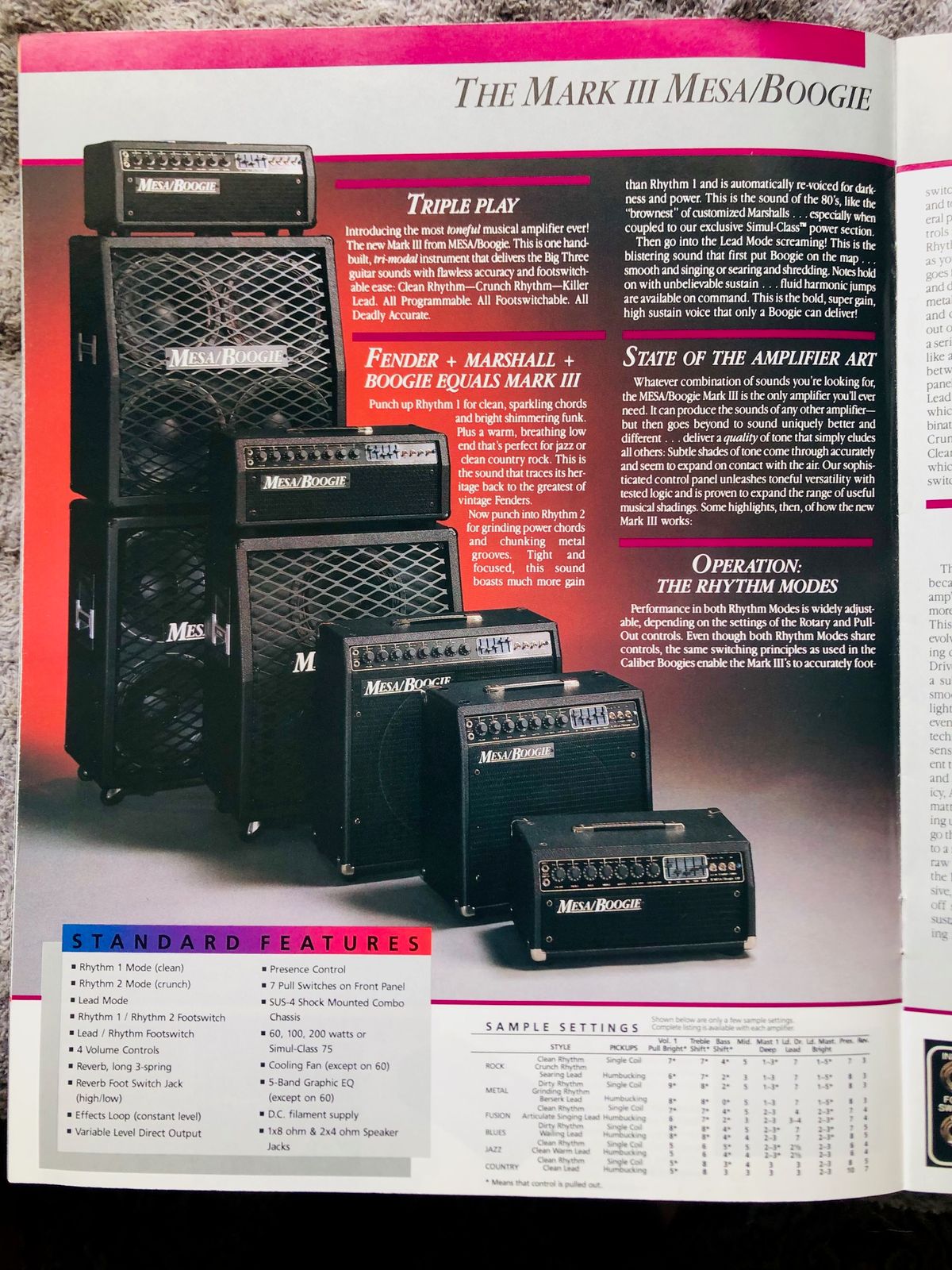
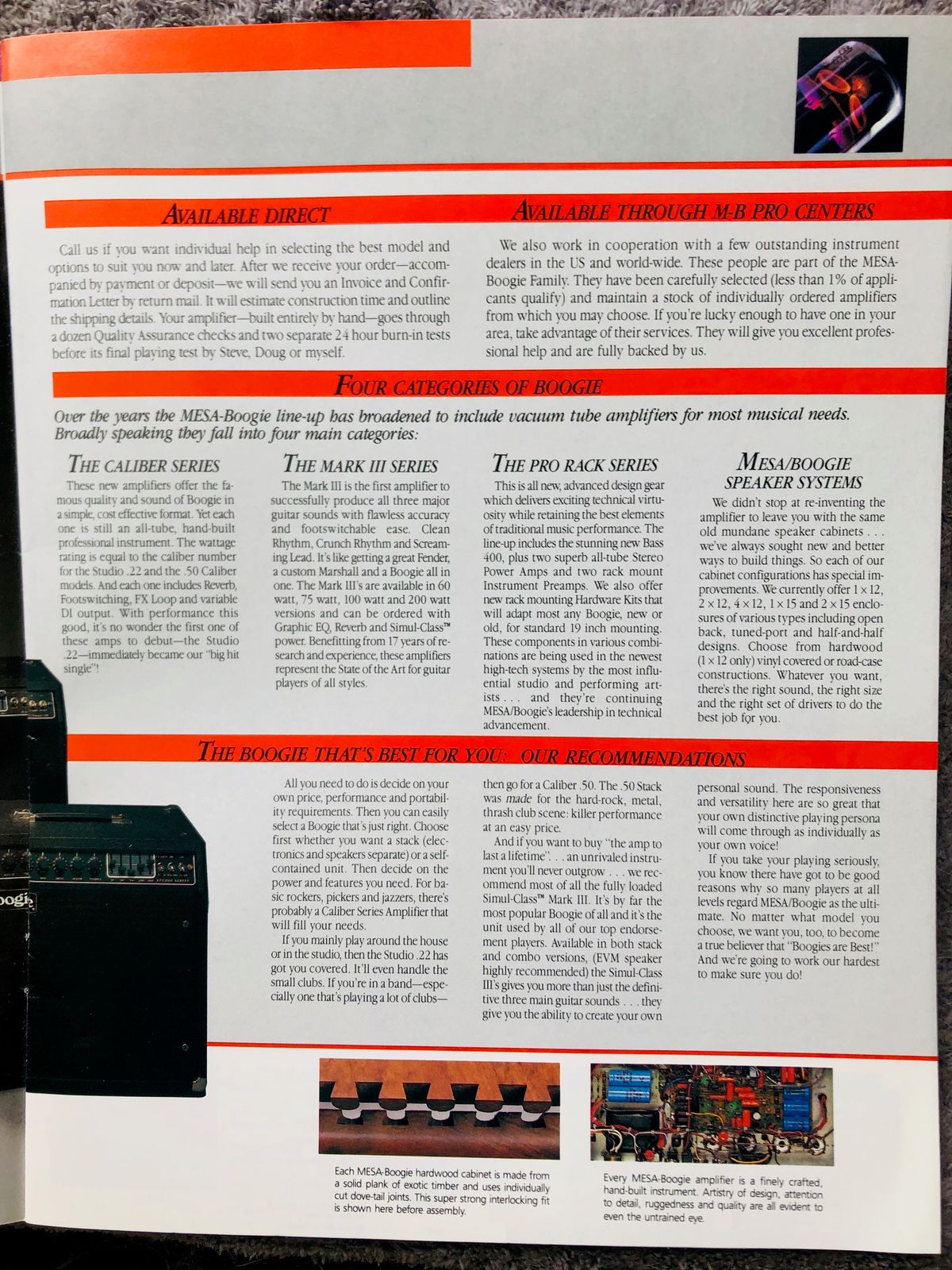
Mesa/Boogie Catalogue, Circa 1985
The story of the Mark series has been told countless times. It all started in the 60s, with Randall Smith playing a practical joke on a local guitarist by installing a Fender Bassman's power section into a Fender Princeton as well as a 12-inch speaker (Stoner, 2022). Approximately around 150-200 units of these 'Princeton Boogies' were built (Hunter, 2005).
Enter the Mark I. Introduced in 1971, the Mark I revolutionized guitar amplifier design in many ways (McMurry, 2023). The main unique feature that defined it was the cascading gain stage preamp design, with the signal going through "a first gain stage, then the tone stack and volume control, then a gain makeup stage, then a further gain stage before heading towards the output" (Pittman, 2003). This introduced a more aggressive timbre to the world of overdriven guitar amps. Around 3,000 units of Mark I Mesa Boogies were built (Hunter, 2005).
In 1978, Mesa/Boogie introduced the Mark II (Neural DSP & Davies, 2023). An extra gain stage was added to the already existing preamp gain stages, residing within the foot-switchable lead mode, being the first amp to have this feature (Pittman, 2003). The Mark IIB revision was released in 1980, introducing a buffered Fx-loop as well as introducing the Simul-Class power amp technology (Mesa Engineering, 1982).
In 1983, another revision was made, being the Mark IIC. The revision remedied the noisy channel switching between the rhythm and lead channel as well as introducing a pull bass shift onto the control panel (Neural DSP & Davies, 2023).
The ultimate revision of the Mark II line was released in January 1984: the Mark IIC+ (Gill, 2023). The Mark IIC+ replaced the pull 'gain boost' control on the master knob with a 'pull deep' function in addition to revoicing the amp for a more aggressive timbre (Neural DSP & Davies, 2023). This arguably became Mesa/Boogie's most famous amplifier, being featured on Metallica's Master of Puppets, almost every work featuring John Petrucci on guitar, as well as being the amp of choice of many 80s session guitarists (Gill, 2023).
The Mesa/Boogie Mark III was released in 1985 as the successor of the renowned Mark IIC+. When it was released in 1985, the company described it as their 'most toneful musical amplifier ever', with the marketing material alluding the amp to be able to capture the sounds of a Fender clean amp, a Marshall crunch, and the Mesa/Boogie's iconic Mark series lead channel sound. An enigmatic IIC++ factory mod was also made in extremely small quantity, increasing the gain in the lead channel (Neural DSP & Davies, 2023).
Ignoring the changes made in each stripe revisions and the newly added Rhythm 2 channel, the preamp circuitry of the Mark III is further built upon the coveted Mark IIC++ factory mod (Mesa Engineering, 1985b). This gives the Mark III an unmistakable aggressive sound that the Mark series is famous for.
However, compared to the popularity and status of the Mark IIC+ and Mark IV that fetches massive prices on the market, the Mark III is often overlooked and is an affordable entry into owning a Mesa/Boogie Mark series.
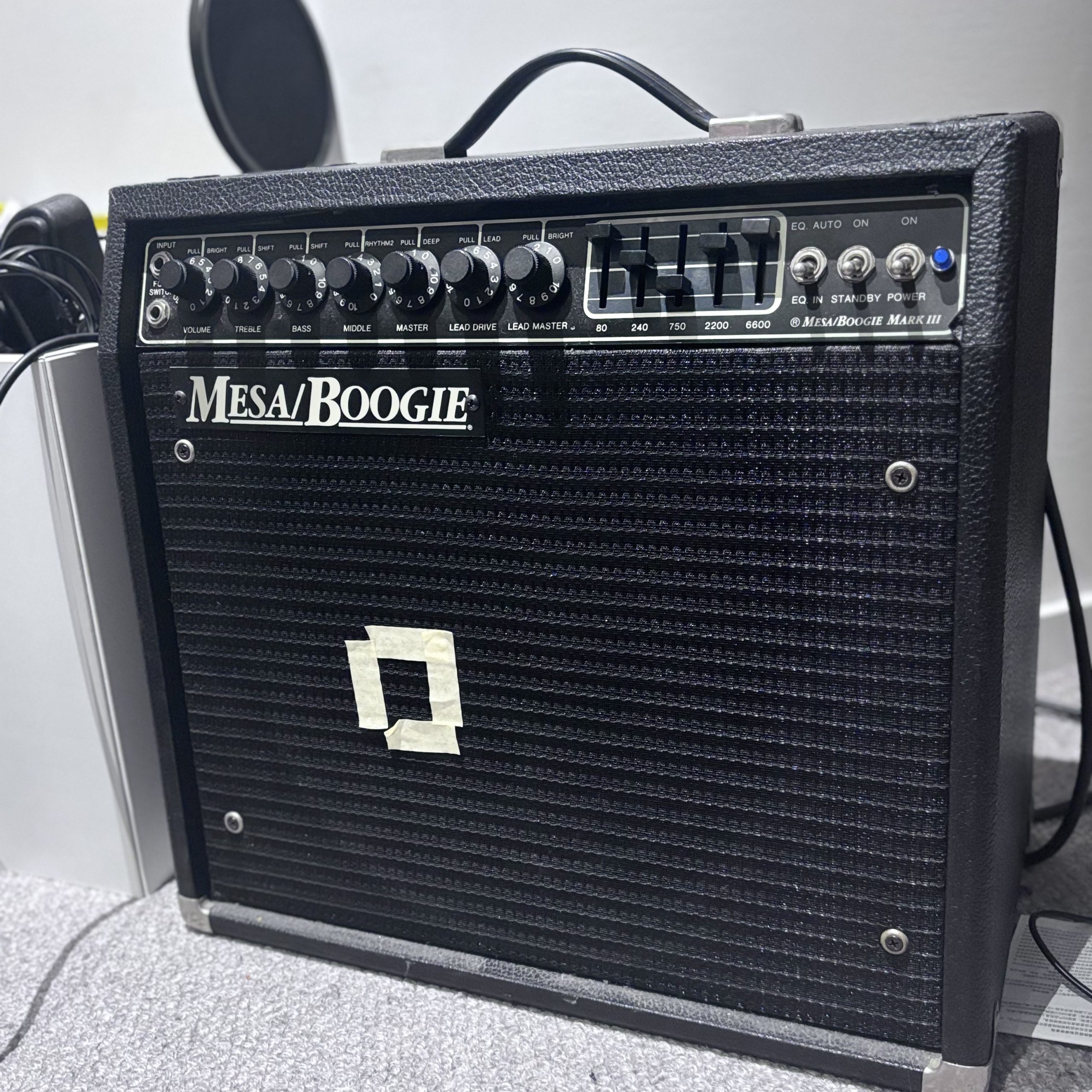
When I first got into heavier music in 2019, I was captured by the tone heard on Dream Theater's Images and Words as well as Metallica's Master of Puppets, but moreso towards the timbre of John Petrucci's guitars. As I slowly gained knowledge of guitar tone, the urge to chase down the Mark Series tone has intensified throughout the years. Through digital plugins, pre-amp pedals, amp modellers, and putting an EQ in an FX-loop of my Orange Micro Dark to try to voice it like a Boogie, all has left me wanting more.In early 2026, I came across a listing for a Green Stripe Mark III at an affordable price. I went to try it out and immediately fell in love. The timbre was everything I expected, plus the rhythm 2 channel was unlike any digital recreation of it.Needless to say, I immediately got the amp and played it almost everyday. It's one of the most inspiring pieces of gear that I own and, indirectly, made me a better guitar player since it made me want to play and practice the guitar every day.This particular amp is a rare configuration of the Mark III - a non-simulclass 60W Green Stripe export version. It is loaded with Eminence MS-12 150W 'Black Shadow' speakers. With these captures, I intend to have a digital record of my favourite tones that I get from the amp that I can use within my works. I hope that these tones inspire you the way that it does with me.
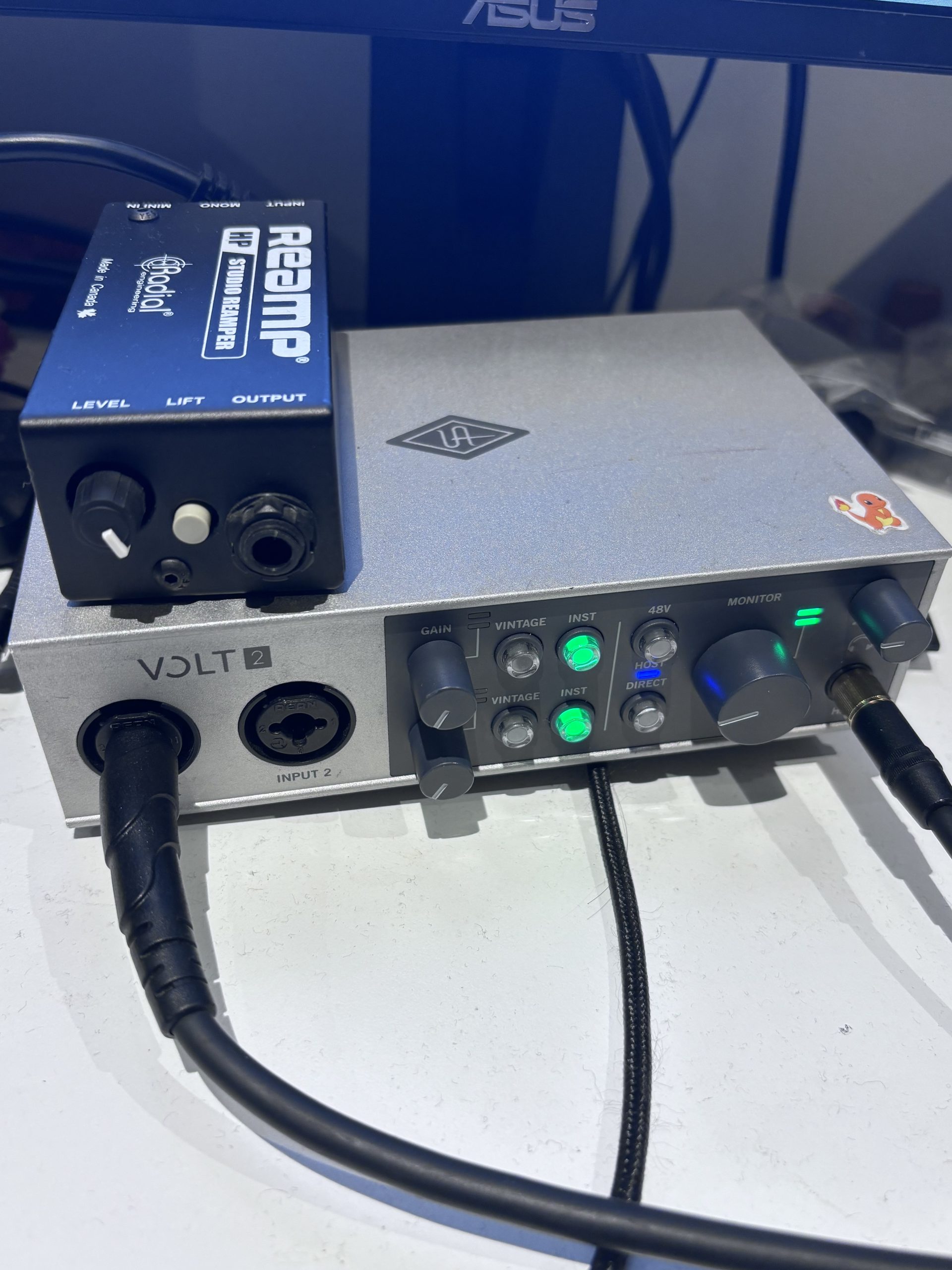
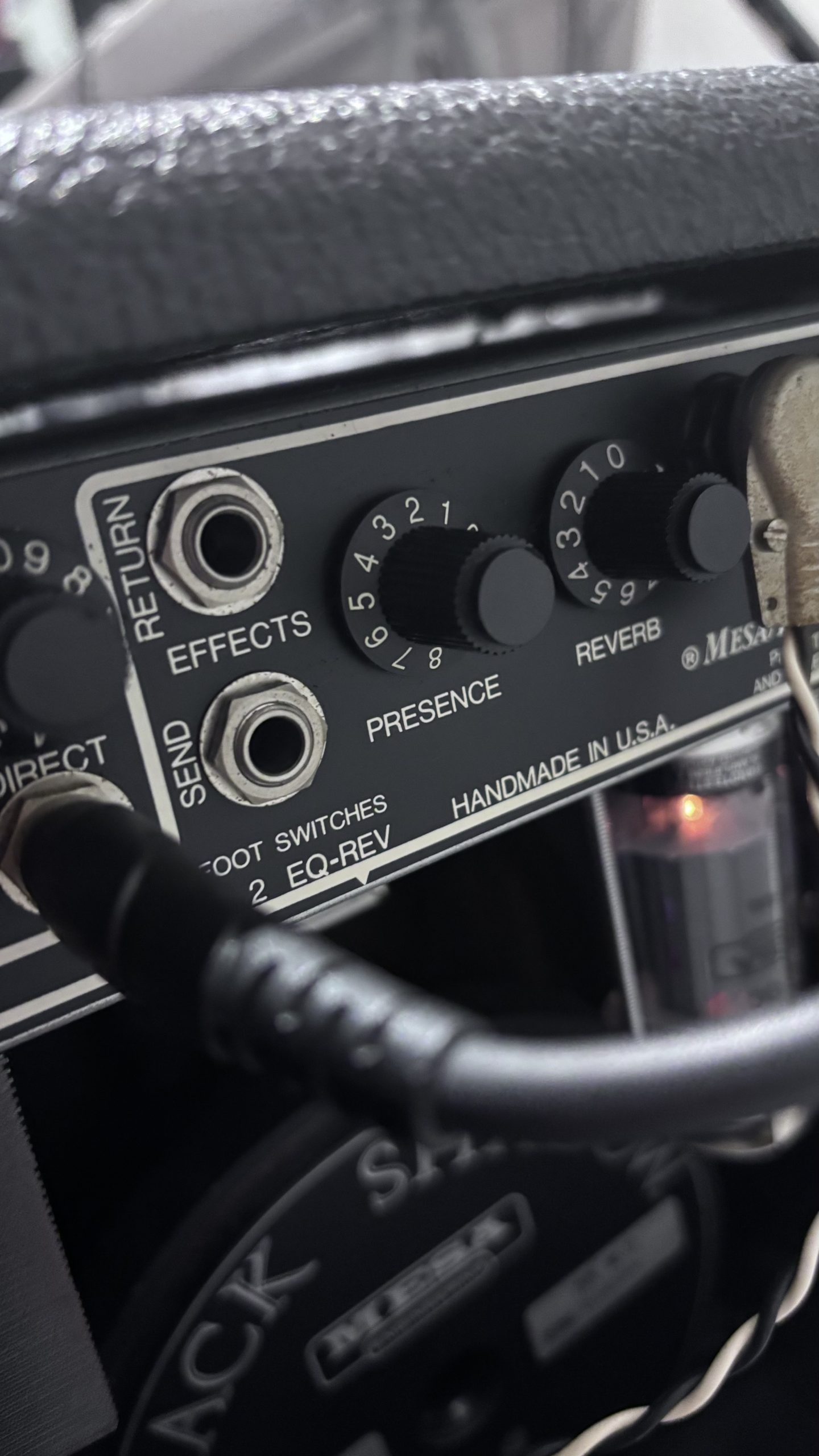
The NAM captures were done using a Universal Audio Volt 2 audio interface and a Radial Reamp Studio Reamper using the sweep method, with the signal returning via the direct output from the back of the amp (known as the 'slave out' on Mark II amps).
MARK III CLEAN
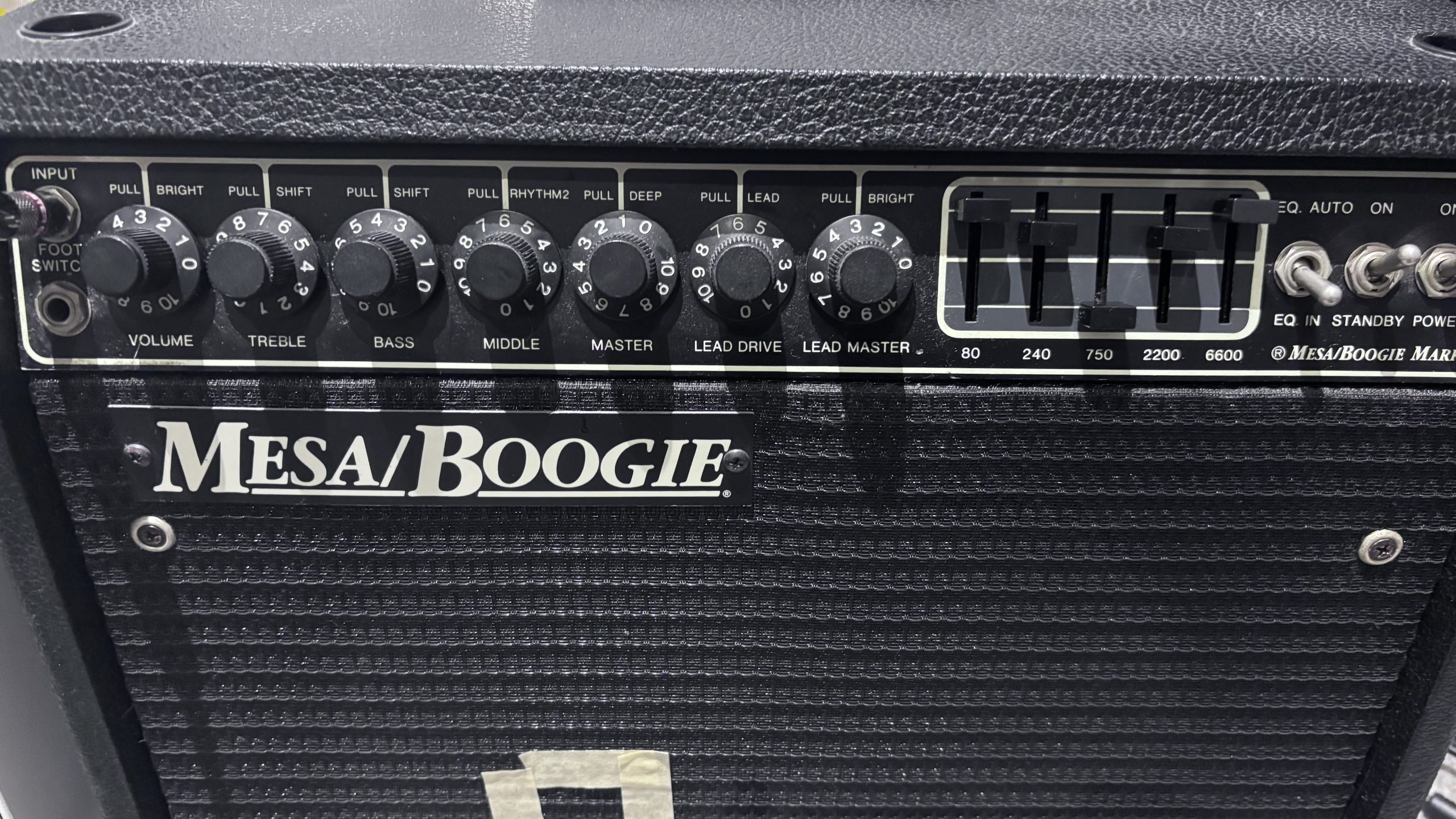
MARK III CRUNCH
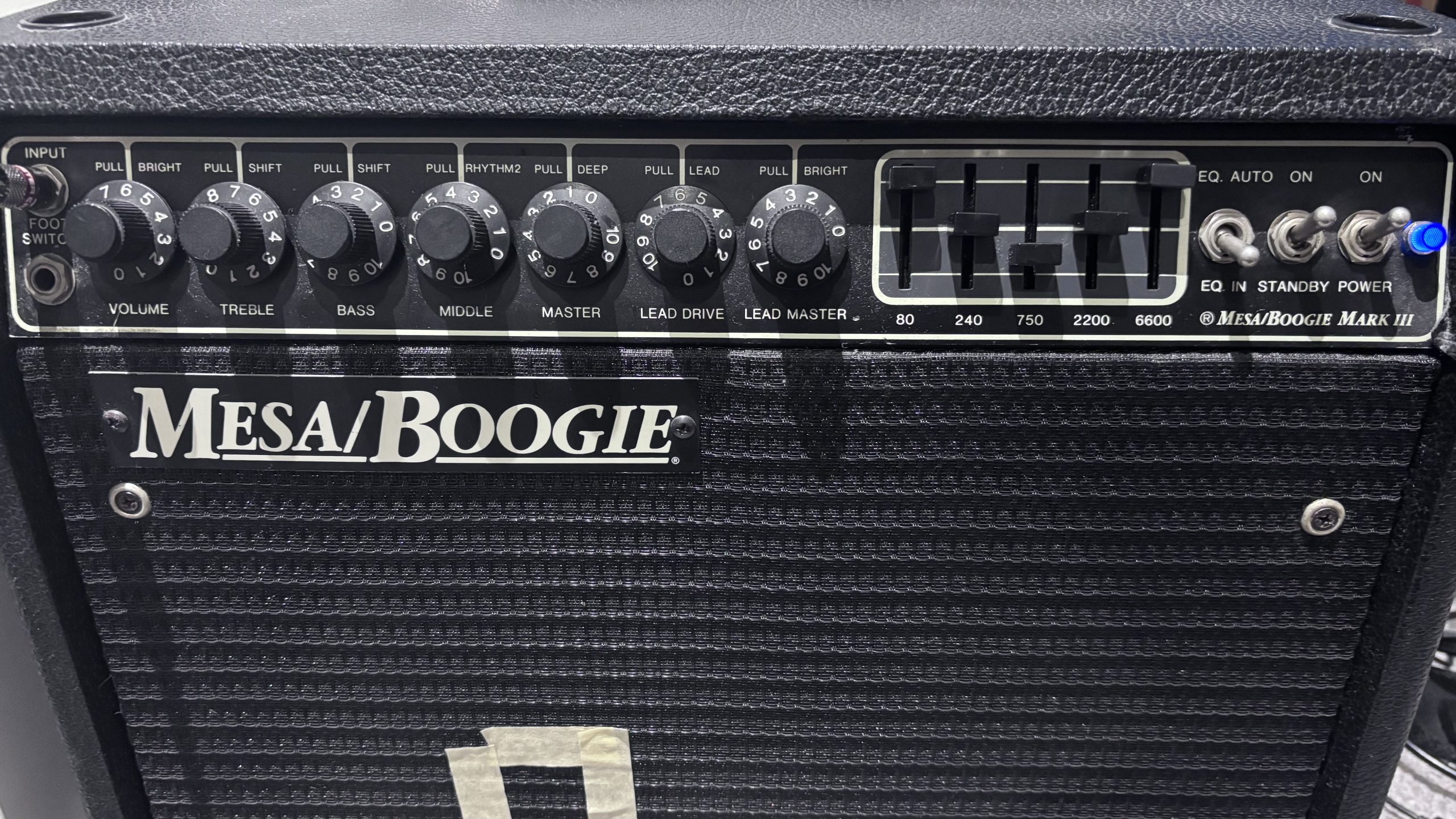
MARK III OLD SCHOOL RHY
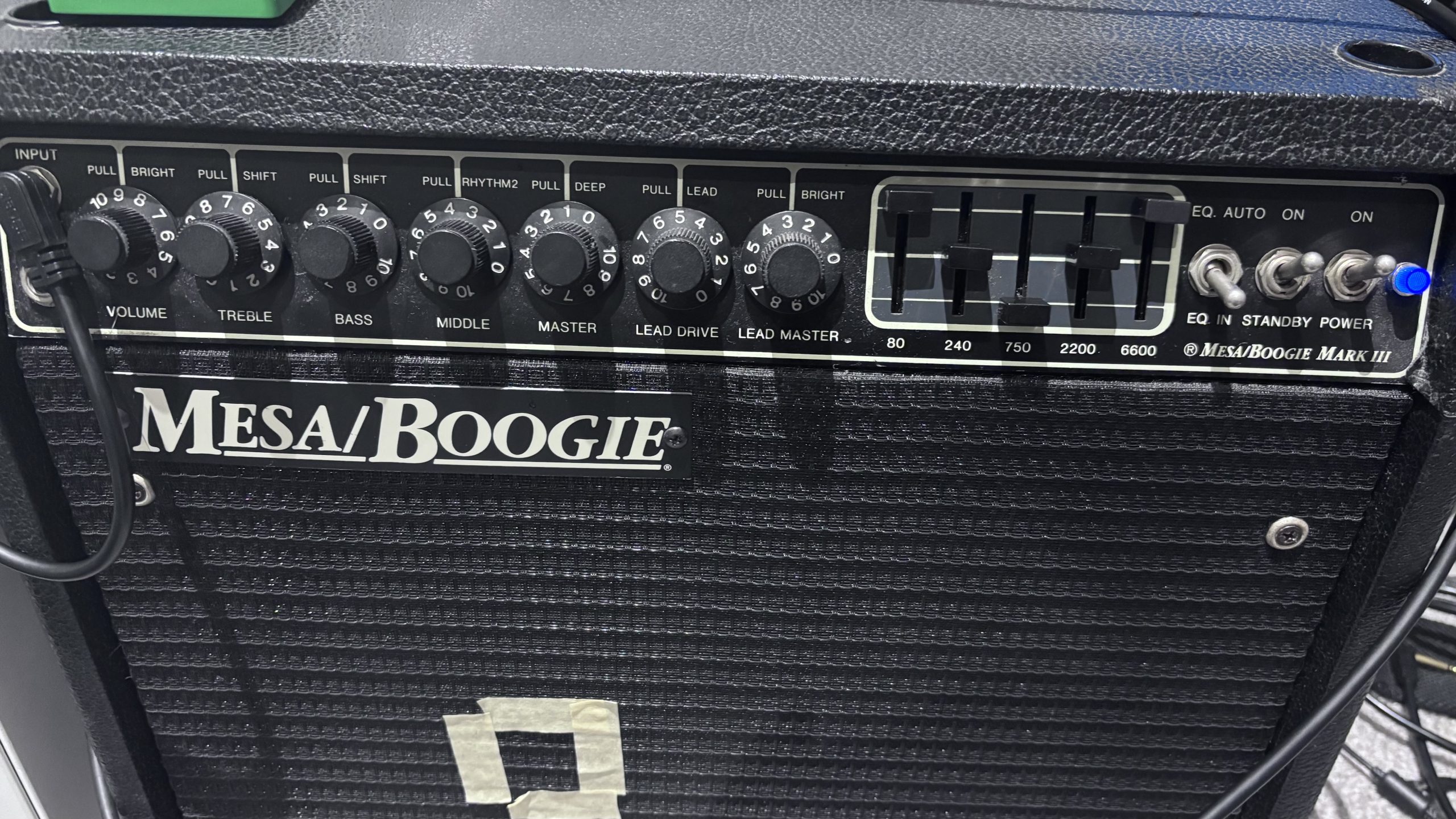
MARK III JP HI GAIN
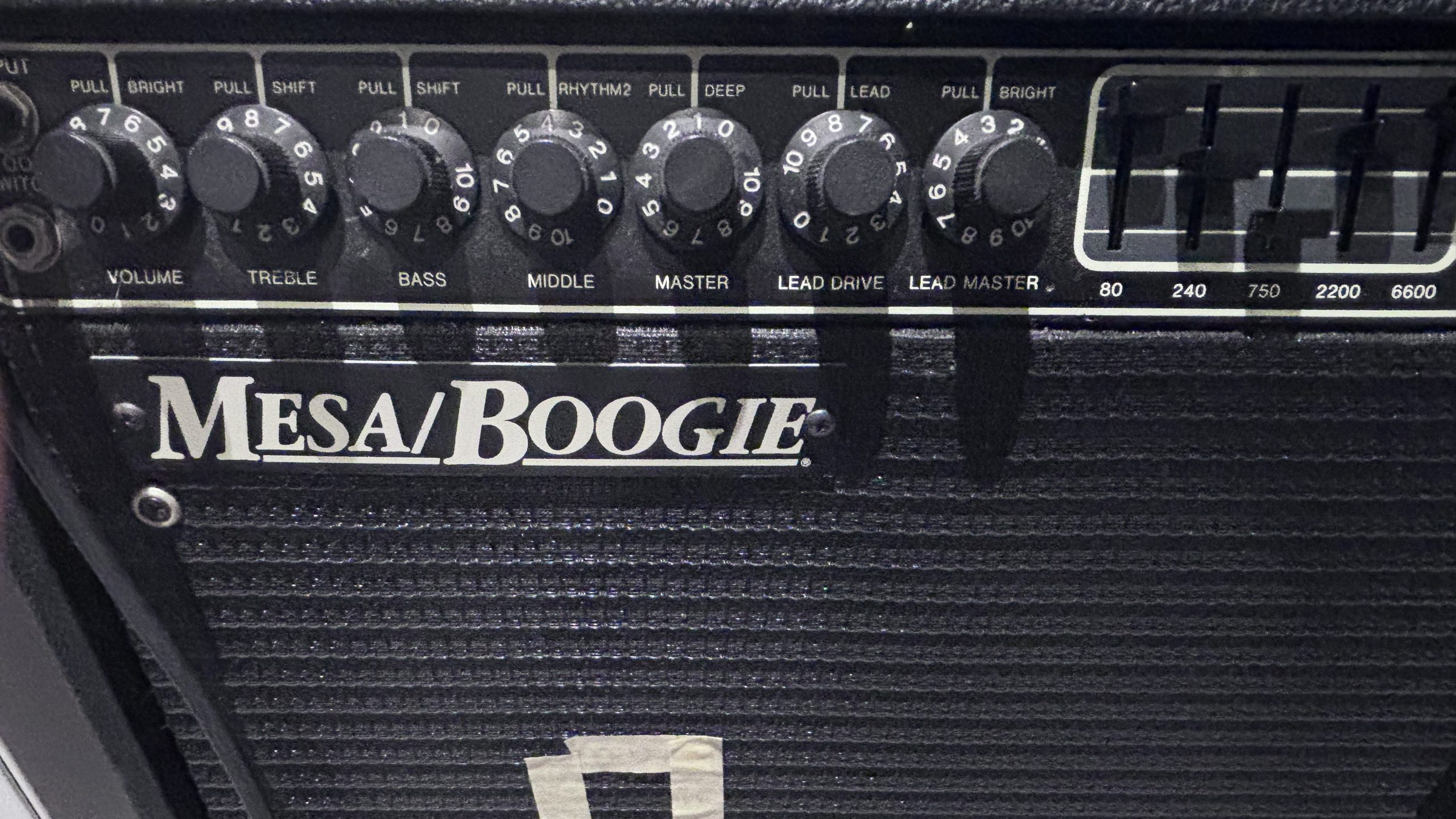
MARK III MONORHYTHMIA
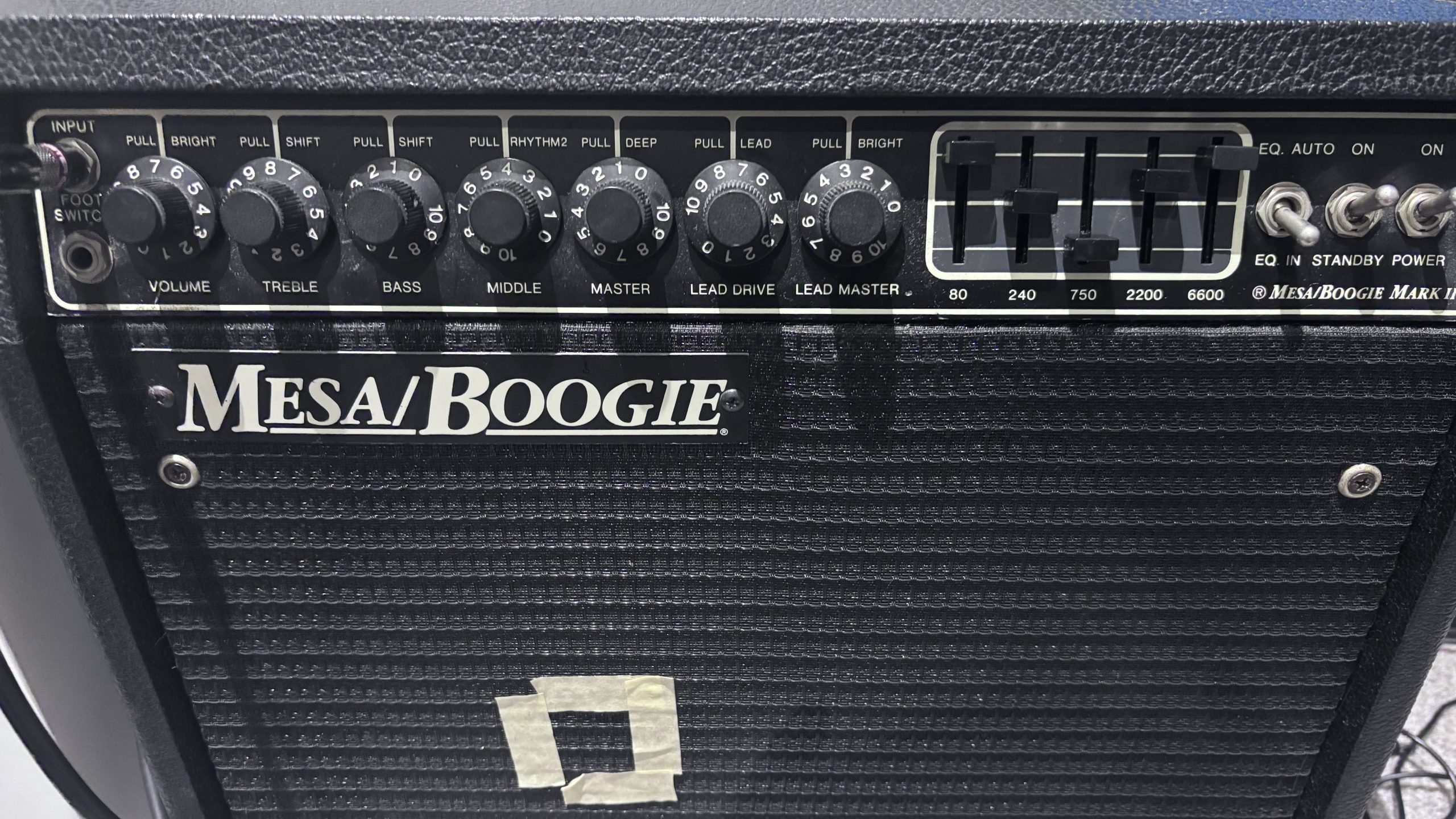
MARK III LEAD
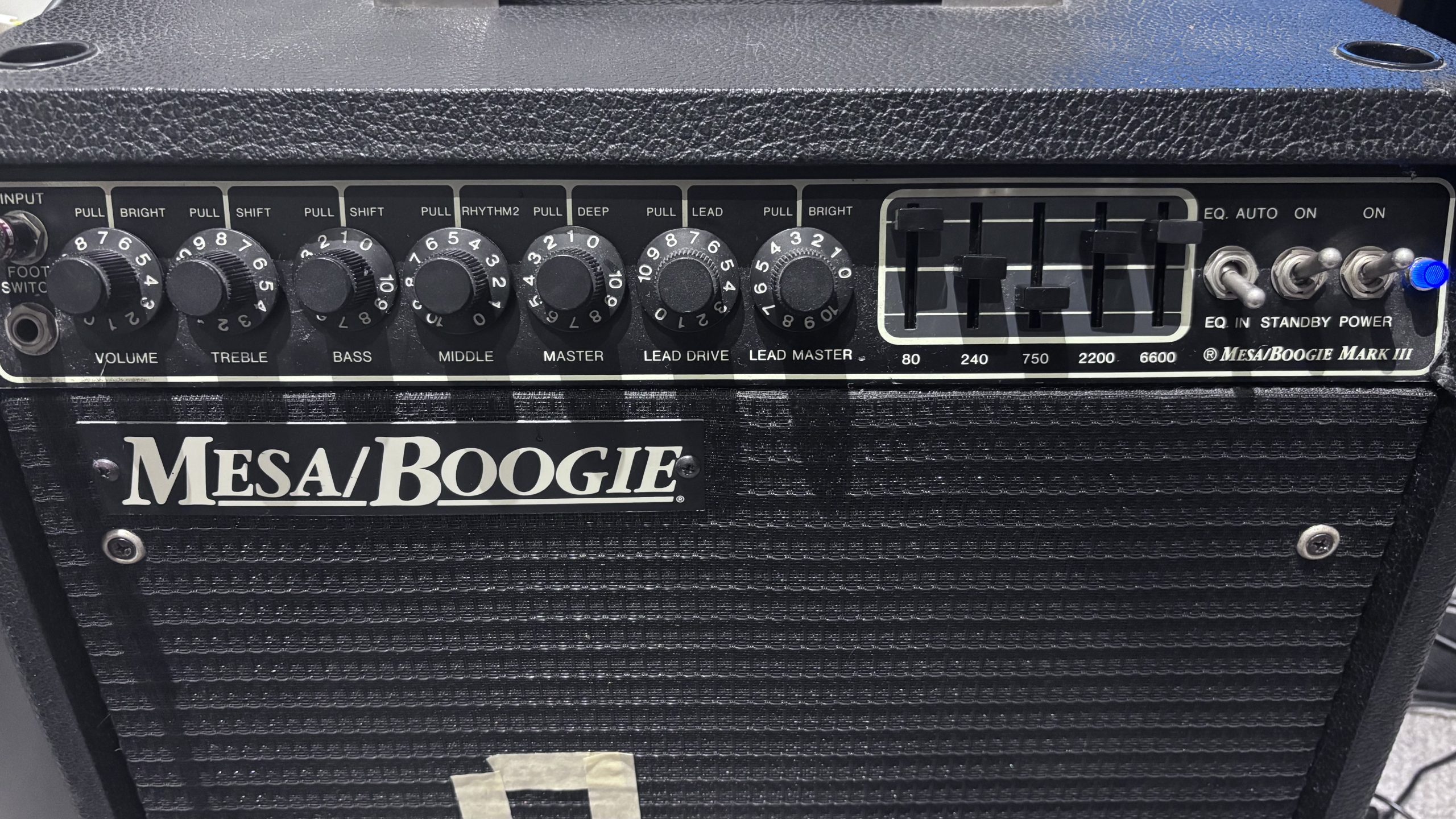
MARK III SCREAM LEAD
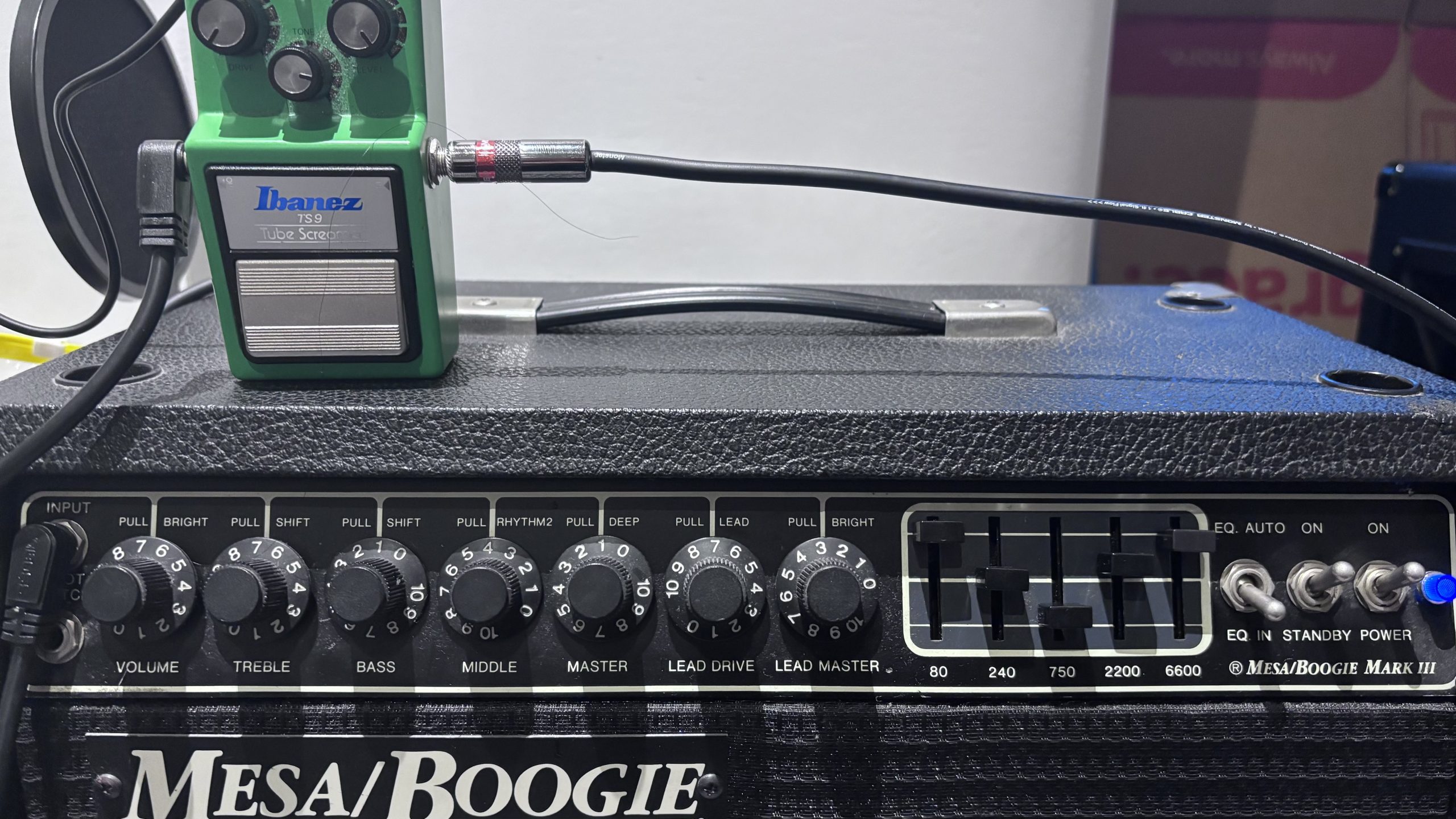
With Mark III CLEAN and post processing as described in the "Captures Explained" section
With MARK III SCREAM LEAD
Gill, C. (2023, March 2). In praise of the 1984-85 Mesa/Boogie Mark IIC+, the high-gain boutique amp behind rock and metal’s holy grail tones. Guitar World. https://www.guitarworld.com/features/mesa-boogie-mark-iic-1984-1985
Hunter, D. (2005). The Guitar Amp Handbook. Bloomsbury Publishing USA.
McMurry, B. (2023, January 27). Mesa/Boogie Mark I amp – General Information, Spec Sheet, and Review – AudioGear.us. Audiogear.us. http://www.audiogear.us/2023/01/27/mesa-boogie-mark-i-amp-general-information-spec-sheet-and-review/
Mesa Engineering. (1985a). Mark III Catalgue Circa 1985.
Mesa Engineering. (1985b). Mark III Circuitry Schematics. https://el34world.com/charts/Schematics/files/Mesa_boogie/Boogie_mkiii.pdf
Mesa Engineering. (1985c). Mesa Boogie Catalogues 1982-1995. Reverb.com. https://reverb.com/item/34101037-mesa-boogie-catalogues-1982-1995
Mesa Engineering. (1985d). MESA-BOOGIE MARK III OPERATING INSTRUCTIONS MESA ENGINEERING. https://mesa-boogie.imgix.net/media/User%20Manuals/Mark%20III.pdf
Neural DSP, & Davies, D. (2023, March 2). A history of the Mesa Boogie Mark II series. Neural DSP. https://unity.neuraldsp.com/t/a-history-of-the-mesa-boogie-mark-ii-series/10241
Pittman, A. (2003). The Tube Amp Book. Hal Leonard Corporation.
Reiff, C. (2013, April 15). Builder Profile: Mesa/Boogie. Premier Guitar. https://www.premierguitar.com/gear/builder-profile-mesa-boogie?page=1
Stoner, B. (2022, September 7). A brief history of Mesa/Boogie. Guitar.com | All Things Guitar. https://guitar.com/features/a-brief-history-of-mesa-boogie/
oh hi mark